As the digital healthcare and pharma landscape continues to evolve, what key technology trends should you consider when developing your customer digital strategy for 2022/23 and beyond?
Table of Contents:
- The rise of patient agency and the fall of paternalistic healthcare
- The importance of patient-centric design
- Telemedicine grows up
- Inclusion or exclusion with digital?
- Extended reality at scale
- The era of the Meta-Surgeon
- The ‘Cobot’ – tech to help HCPs
- Tech as part of treatment

The rise of patient agency and the fall of paternalistic healthcare
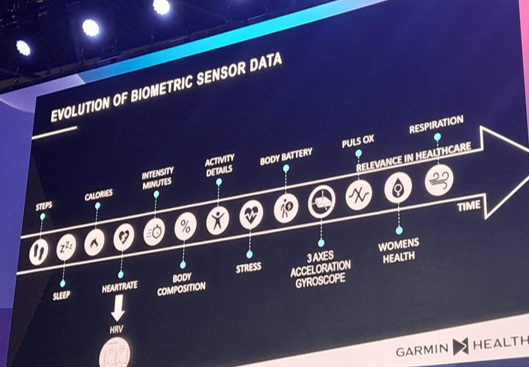
For years we have been discussing the move away from a paternalistic healthcare model to truly empower patients. This is now becoming a reality for many, and goes way beyond apps for step-counting and sleep-tracking.
Garmin Health shared their use of wearables at the Mobile World Conference 2022 – which we attended earlier this year – with biometric data to recognise symptom patterns that might indicate a particular condition, such as anxiety, depression, diabetes and sleep apnoea – a concrete step in the move towards prevention control and patient agency.
Patients are reassured when they can see their health data and don’t need as much frequent contact with their healthcare provider (HCP), therefore helping to relieve a HCP’s case load.
And, the best patient support doesn’t always mean wearables; it depends on what is most useful for the patient and the situation. For instance:
‘HumanITcare’ is a company working with hospitals in Barcelona to provide patients with chronic conditions devices into which they are prompted to enter information directly, to track their health data and share it with their doctors, giving them and their hospital greater control over the management of their condition
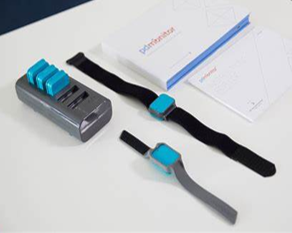
The National Institute for Health and Care Excellence (NICE) is currently evaluating the viability of a new wearable device, PDMonitor, for patients with Parkinson’s Disease. The device uses medical-grade technology to monitor patients’ motor symptoms in real time. The stream of data from the monitor will help physicians tailor treatment on an individual basis, and explore how a patient experiences symptoms in their everyday life.

The importance of patient-centric design
Of course, a tracking or biometric data collection app only works if it is used. So many devices and apps have been created with good intentions, but fail in the key user experience criterion of ‘desirability’. This is also true for many healthcare/pharma websites.
A good example of this is with elderly patients with ‘fall alarms’, that don’t wear them. Or if they do, they don’t know how to activate the emergency button when needed. It is vital that the technology is designed with and for the user if it is to be used effectively. Veyetals, a start-up founded by Nauman Jaffar, demonstrated a face recognition app used by the Canadian government that can determine a patient’s vital signs just from viewing their face.

Telemedicine grows up
The COVID pandemic, like many major disruptions, brought about much-needed innovation and progress in the remote provision of healthcare, as hospitals, clinics and practitioners took to Zoom, apps and phone appointments in preference to face-to-face meetings.
Many healthcare systems and clinics are keeping the efficiency and patient convenience of telemedicine for those that want it.

However, France is embracing the change. French patients can now access their electronic health records, connect with health professionals, utilise a health calendar to bring together appointments and health events, and source a catalogue of useful health apps, all via Mon Espace Santé (My Health Space).
Ann Mond Johnson of the US Telemedicine Association, has commented that some providers are resisting the maintenance of telemedicine where it might impact health provider revenues.

Digital inclusion or exclusion
We should also bear in mind that whilst digital solutions such as telemedicine can widen access to effective and personalised healthcare, they can also exclude.
Both connectivity and digital literacy can and should be considered; people need access to devices with affordable data plans that enable them to converse with their HCPs. And a bias can, albeit unwittingly, be built into digital solutions.
For example, digital solutions that rely on artificial intelligence (AI) can run into the significant issue of being biased towards Caucasians. Work must be done to increase the proportion of data that covers other ethnic groups. Therefore, pharma and medical device companies must evaluate their digital health solutions to ensure they are inclusive for all patient groups, regardless of income and characteristics.

Extended reality at scale
5G provides the speed that paves the way for adoption at scale of extended reality technologies. This includes smaller, more portable devices, and more immersive / collaborative environments.

The combining of 5G with new mobile developments, specifically AI, can be crucial; both complement the other to take us into the next era of mobile device usage. 5G brings the ability to make decisions instantaneously, with low latency; AI brings us the data to inform
those decisions, and data science is therefore one of the most important areas for companies to invest in for the future.
As an example, an Estonian research group is in the process of developing an application that allows anyone to create an Augmented Reality experience without knowing how to write code; with assets able to be uploaded and placed around the digital space in a variety of ways.
A 5G RedCap (aka Reduced Capability, a high bandwidth but light version of 5G that is used in smart wearables such as glasses and watches) specification has been announced. This opens up a new space of around 10 billion IoT (Internet of Things) connections, and will be beneficial for the building of ‘the metaverse’.

The era of the Meta-Surgeon
Extended reality is already being actively used in various ways to improve surgical preparation and help hospitals save resources.

This year, for the first time, breast cancer surgery took place remotely. One doctor was on-site, with the patient. The other was 900 kilometres away in a different country; in Lisbon, at the Breast Unit of the Champalimaud Foundation, surgeon Dr Pedro Gouveia was in the theatre. Spaniard Dr Rogelio Andrés-Luna was overseeing and guiding from the University of Zaragoza, in Spain. Dr Gouveia wore mixed reality goggles – the HoloLens 2. Not only could he see the patient in front of him. But he could also read information projected onto the inside lens of the goggles.
Innorea Projects is also one of various companies marketing a virtual reality product that enhances surgery planning by providing the surgeon with a ‘digital double’ of the patient’s organ, with all the patient’s pertinent health information also available within the experience, so that they can simulate procedures in advance.
A similar product is used for training surgery students, and for the marketing of medical devices, to demonstrate how a device sits and operates within the body.
Robotisation of surgery is now a certainty, and to get there the metaverse will need to be brought to surgeons.

The ‘Cobot’ – tech to help HCPs
With an ageing population and increasing demands on health systems more automation is essential. But the problem with automating healthcare is that a large amount of it is non-routine; clinical judgment and empathy can’t be replaced by machines.
However, HCPs have plenty of duties that are routine – e.g. typing details into health records. By automating these, we can free up their time to focus on the tasks that require human input. In manufacturing, this human-machine type of collaboration is referred to as the ‘cobot’.

Tech as part of treatment

During the pandemic the focus was heavily on apps that met the need for home-based diagnosis. Going forward the focus is on apps that help patients to monitor more complex data than before – rather than just wellness, being able to use the app to manage one’s chronic disease for instance.
Unsurprisingly, health apps that show clear efficiencies that are passed onto the HCP as cost savings, are the ones most likely to secure investment.
But the involvement of apps in the healthcare conversation is patchy, as HCPs don’t often recommend them.
There are over 360,000 apps and it’s very challenging to distinguish which ones will be useful for a specific patient. HCPs also have a lack of trust in the apps available since there is a lack of suitable quality indicators and regulations. This is complicated by the fact that medical training in many countries is still quite traditional, and doesn’t prepare them for the digital/app landscape.
Conclusion
We are seeing technology deliver a new healthcare model in which patients participate fully in managing their condition. With surgery already entering a new phase enhanced by extended reality, HCPs’ roles are on the brink of being revolutionised, with routine tasks set to be covered by machines to do more with less, in the face of ever-increasing demand. Industry can invest to help ‘join the dots’ by creating and supporting shared systems for data and consent, and regulation for digital health products, as well as using new tech to break down barriers to participation.